


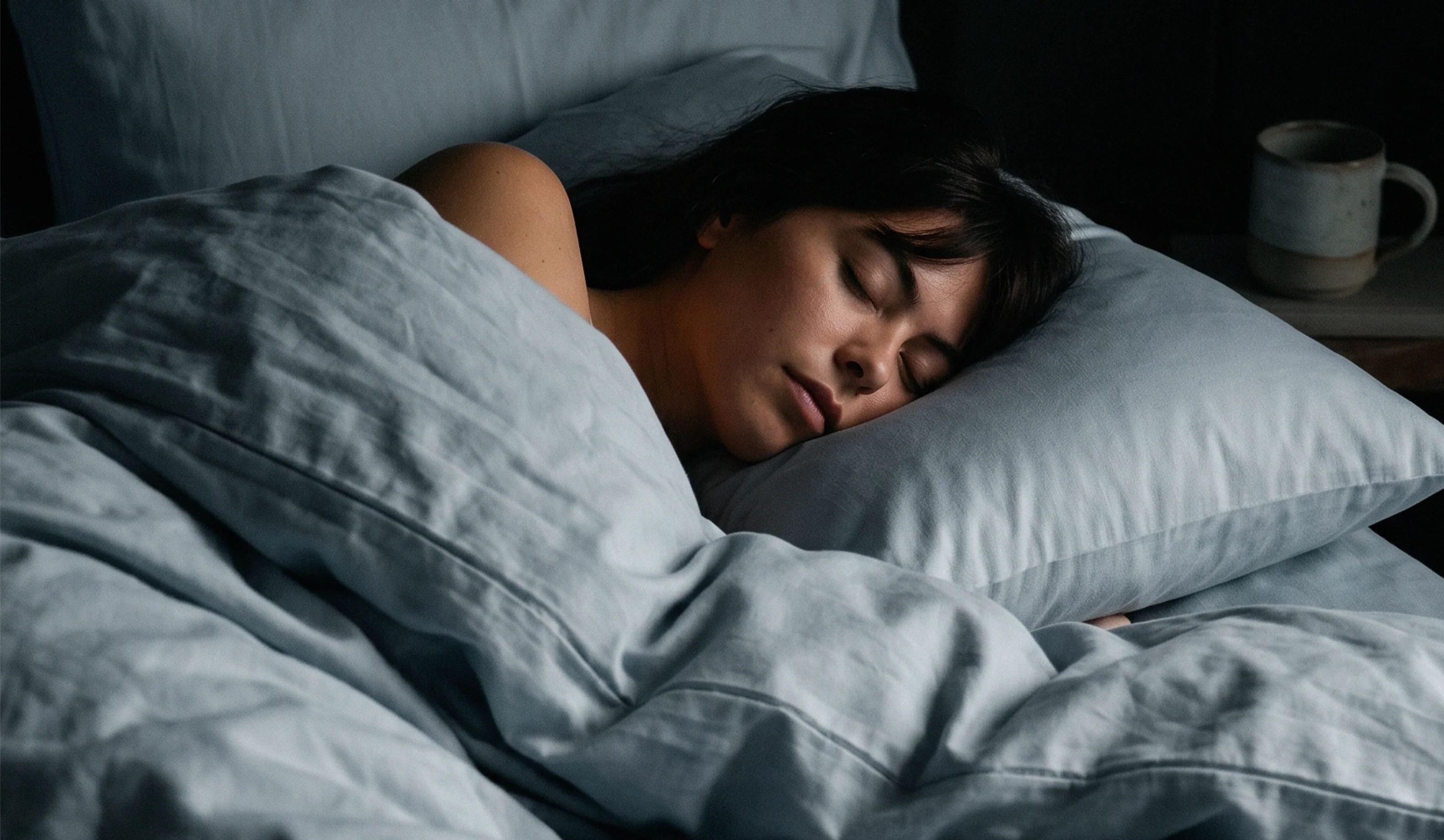
Waking up in the middle of the night in a bed that's too warm can disrupt more than just a peaceful dream. You kick off the blanket, open the window, change your clothes – and still wake up tired in the morning. If you're wondering how to sleep more comfortably when experiencing night sweats, don't necessarily start by setting your bedroom to a cooler temperature. A large part of your night-time microclimate is determined by what's closest to your skin: your pajamas, bedding, sheets, and even the duvet itself.
Sweating is a natural way for the body to regulate its temperature. The problem often arises when moisture gets trapped close to the body, turning a pleasantly soft bed into a sticky layer where it's impossible to rest. The goal isn't to sleep in the cold. It's about creating a bed that allows air to circulate, absorbs moisture intelligently, and doesn't feel heavy or damp with every turn.
How to sleep with night sweats: start with your bed's microclimate
Bedroom temperature is only one part of the equation. Even in a cool room, dense synthetic fabric or an overly warm duvet can trap heat exactly where you don't want it – between your body and the mattress. For night sweats, it's often more effective to use several light, breathable layers rather than one very warm one.
Try to view your bed as a whole. The sheet affects what you feel beneath you. The duvet cover determines skin contact with every movement. The duvet adds or subtracts warmth. If all three elements are made of non-breathable materials, an open window often isn't enough. When they work together, you might not have to think about your bed at all at night – and that's precisely the ideal outcome.
A practical foundation is a slightly cooler, well-ventilated room and the ability to react to temperature by simply removing one layer. For some, this means a lighter duvet year-round; for others, a separate thinner blanket within reach. If you share a bed with a partner, different duvets don't have to be a design compromise. On the contrary, they allow each person to set their own comfort level without a nightly tug-of-war over the covers.
The material against your skin matters more than you think
When choosing bed linen, it's worth considering not only the fiber type but also the fabric weave. Cotton is naturally breathable and can absorb moisture, but its processing changes the resulting feel. Dense cotton sateen has a smooth, elegant surface and drapes beautifully, but on a warmer night, some might find it less comfortable than a more airy weave.
Percale is a plain-weave cotton fabric that feels matte, crisp, and light to the touch. It evokes the feeling of a perfectly aired hotel bed – clean, cooler, and firm without unnecessary heaviness. That's why many people seek it out in summer or when they tend to overheat at night. However, it's good to know that its cooler character might not suit someone who loves a very soft, warm touch.
Linen is another natural choice for warmer nights. Its structure isn't perfectly smooth, but it's precisely the subtle irregularity that creates space for air between the body and the fabric. Linen handles moisture well and softens with each wash. It's a material for those who appreciate a relaxed, natural texture and don't mind its characteristic wrinkles.
Conversely, for significant night sweats, pajamas or bedding made of materials that cling to the skin or wick away moisture slowly can be less comfortable. This doesn't mean that synthetic fibers are automatically bad – their properties depend on the specific processing. However, in bed, it makes sense to prioritize a material that feels airy on bare shoulders, back, or legs, even after several hours of sleep.
Layers you can easily adjust at night
We often fall asleep at a different temperature than we wake up to. Our body, the weather, and a heated apartment change throughout the night. That's why for sweating, a bed that isn't rigidly set for one season is beneficial.
Instead of a very thick all-season duvet, a lighter duvet in a breathable cover and a separate throw or blanket for cooler mornings might work better. If you wake up sweaty, you can remove one layer without being completely uncovered. This small detail can prevent that familiar cycle: first it's too hot, then after kicking off the duvet, it's too cold.
The mattress protector is also important. If it's waterproof and not very breathable, it can create a warm barrier under the body, even if the bedding is made of pleasant cotton. Look for a solution that protects the mattress but doesn't act like an impermeable film. Similarly, it's worth checking your pillow filling. The head and neck are sensitive in temperature regulation, so an overly high or warm pillow can disrupt sleep more than you expect.
Don't forget your sheets and pajamas
When changing bedding, the sheet is easily overlooked, yet it's in contact with your body for hours. A fitted sheet made of breathable cotton creates a fresher base on the mattress. Choose the correct pocket depth so it doesn't bunch up on the bed. A crumpled fabric under your back or legs on a warm night is a minor detail that can unnecessarily disturb you.
Pajamas should work with your sleep style. Some will appreciate a light cotton top and shorts, while others find it more comfortable to sleep in long, loose sleeves that catch some moisture and prevent direct skin contact with the duvet. The key is that nothing should be constricting at the waist, under the breasts, or in the shoulders. A tight hem and overly fitted cut turn into a detail in the heat that you suddenly feel with every movement.
Evening habits that give your bed a chance to work
Textiles won't solve everything. If you eat very spicy food, drink alcohol, or have an intense workout late in the evening, your body can remain warm even when you're already in bed. You don't have to create a strict routine. Rather, observe your own patterns over a few weeks: after which evenings do you wake up sweaty, and does that change after a lighter dinner or an earlier shower?
A simple transition between day and night also helps. Briefly airing out the room, dimming the lights, putting your phone out of reach, and changing into clean, light pajamas aren't major rituals. Together, however, they signal to your body that it can slow down. Your bed then isn't the last place you bring the warmth, stress, and hustle of the entire day.
Wash bedding regularly according to label instructions to prevent the accumulation of sweat and body product residues. When washing, don't overdo it with fabric softener. It can create a coating that alters the natural feel and breathability of the fibers. Clean cotton or linen often don't need strong perfuming – their feel relies on texture, not a scent from the washing machine.
When not to look for the answer only in the bedroom
Occasional sweating on a hot night, during a change of seasons, or after a demanding day is common. However, if night sweats are new, severe, recurring for an extended period, or accompanied by other difficulties, it's wise to discuss it with a doctor. The bedroom can significantly improve comfort, but it should not replace professional consultation.
While you're figuring out what works for you, don't change everything at once. Start with one thing – for example, a more breathable duvet cover or a lighter duvet – and give yourself a few nights to observe. Comfort in the bedroom doesn't come from one miraculous material. It comes from details that together create a bed you look forward to in the evening and from which you don't wake up feeling like you fought with the temperature all night.
A peaceful night doesn't have to be perfectly cold. It's enough for your bed to adapt to what your body needs – gently, airily, and without unnecessary awakenings.
Zdieľať:
Towel weight: what does it mean when choosing?
Cotton sateen and its properties in bed