


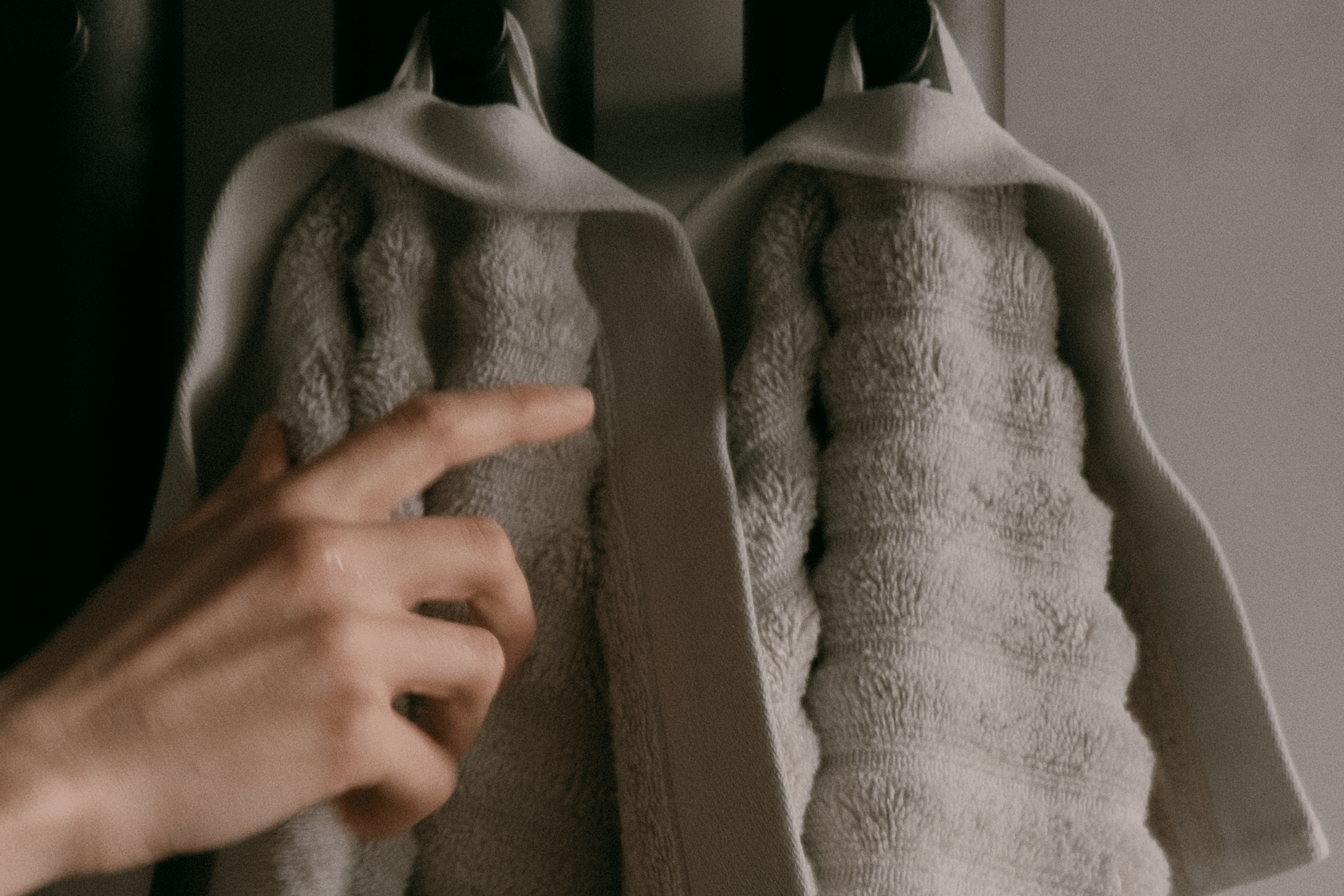
You reach for a towel in the morning, and with the first touch, you know if it will be a pleasant end to your shower, or just something you need to have handy. Towel grammage - what does it mean in practice? It's not a secret code for quality, but a very useful piece of information about how dense the fabric is, how much water it can absorb, and how quickly it dries after use.
When choosing bathroom textiles, it makes sense to consider grammage along with the material, weave type, and what your typical day looks like. A different towel will delight you in a small bathroom without sufficient air circulation, and a different one in a home ritual when you want to wrap yourself in soft cotton after a bath.
Towel Grammage: What Does GSM Mean?
Grammage is expressed in grams per square meter, often under the abbreviation GSM. It therefore refers to the weight of one square meter of fabric, not the total weight of a specific towel. A larger towel will naturally weigh more than a small one, even if both have the same grammage.
The higher the number, the denser and fuller the fabric usually feels. For terry towels, this often means more cotton loops, which create the characteristic soft surface and absorb moisture. However, a higher grammage does not automatically mean that the towel will suit everyone.
A thick towel has a beautifully voluminous drape, pleasantly wraps around your shoulders, and after a shower, it feels almost like a short home ritual. However, it also needs more time to dry. A lighter towel is easier to hang, takes up less space in a suitcase and in the washing machine, and is usually ready for another round sooner between uses.
What Towel Grammages are Used
To help you navigate, we can divide grammage into several practical categories. Consider them as a guide, not a strict rule. The final feel is always influenced by the type of cotton, the length of the loops, the processing of the yarn, and the fabric's final finish.
Approximately 300 to 400 GSM: Light and Quick-Drying
Towels with a lower grammage are thinner, more compact, and dry relatively quickly after washing. They are suitable for travel, sports bags, for guests' hands, or for bathrooms where textiles don't have proper ventilation.
Their advantage is not the effect of a fluffy layer, but practical lightness. With properly chosen cotton, they can still be pleasantly absorbent, but they won't offer the same dense feel as a towel with higher GSM. For some, this is exactly it - especially if they don't like the feeling of heavy wet fabric on their skin.
Approximately 400 to 550 GSM: Everyday Balance
This range is very versatile for the home. The towel has enough material for comfortable drying, yet it is still reasonably maintained and dries well. It feels soft to the touch, but not too massive.
If you are choosing the basic bathroom essentials - bath towels for a couple, towels for a family, or a design-coordinated set with bathrobes - a medium grammage is often a reliable choice. It provides comfort without requiring a large drying room or long waiting times between uses.
Approximately 550 to 700 GSM: A Luxurious Bathroom Moment
A higher grammage brings a fuller appearance, greater volume, and a noticeably soft touch to the skin. Such towels often look beautiful even hung on a hook or folded on an open shelf - they give the bathroom a calm, hotel-like tidy look without feeling impersonal.
However, it is necessary to consider that saturated terry will be heavier and drying may take longer. If you have a space where towels dry well, or you rotate them regularly, a higher grammage can be a pleasant choice for an evening bath and a slower home pace.
Grammage above this limit is already very significant. It can be beautiful to the touch, but in everyday use, it may not be the most practical. For small children, frequent washing, or a more humid bathroom, it is worth prioritizing balance over the number on the label alone.
Absorbency is Not Just a Matter of High Grammage
When talking about what towel grammage means, it's often simplified to: more GSM, more absorbency. This is partly true, as a denser towel has more fibers that can absorb water. However, the full story is more nuanced.
The material also matters. Cotton is popular for towels due to its natural ability to absorb moisture and its pleasant feel. The quality of the yarn and the terry weave are also important. The loops on the surface create a larger area, allowing the towel to effectively collect water from the skin.
A new towel may feel less absorbent than you expect after unpacking. This is not necessarily a material defect. After the first or second wash, the fibers will loosen, the terry will gain a more natural volume, and its ability to absorb moisture will develop. That's why the first wash is important even for textiles that look perfect on the shelf.
Also, be careful with fabric softener. Although it leaves a fragrant and smooth feeling, regular use can coat the fibers and reduce their ability to absorb water. For towels, a quality detergent and correct dosing are often sufficient.
How to Choose Grammage for Your Bathroom
Before buying, don't just look at what looks good in a photo. Imagine the towel in your space - on a hook by the shower, on the radiator, in the laundry basket, and in your hands after an evening bath.
In a smaller bathroom or a household where laundry is done more frequently, you will appreciate a medium or lower grammage. Towels will circulate better in a normal washing routine and dry faster. If you have enough drying space and want the bath towel to be part of a relaxing moment after a shower, a higher grammage makes sense.
For hand towels, it is practical to choose a slightly lighter or medium-density option. They are used often, so it is pleasant when they dry quickly between bathroom visits. For a large bath towel, the grammage can be higher - there, you will notice the fullness, softness, and ability to wrap the body without constantly folding the fabric more.
Aesthetically, it works well when towels and bath towels are the same color or from the same color family, but differ in size according to use. The bathroom then appears coordinated, not uniform. A subtle shade of sand, cream, sage, or deep blue can create an atmosphere even without additional decorations.
Care That Preserves the Softness of Terry
Grammage does not change with washing, but the look and feel of the towel do. Terry needs space for the fibers to rinse well. If you fill the washing machine too tightly, detergent can remain in the fabric, and the towel will feel stiffer after drying.
Wash according to the information on the label and avoid unnecessarily high doses of detergent. For cotton, it also helps to shake the towels immediately after washing - the loops will straighten and remain airier after drying. Drying in a dryer on an appropriate program can promote softness, but it is not a condition. When air drying, allow them to spread out and have air circulation, not tight hanging over each other.
If a pulled loop appears on the surface, do not pull it. Carefully trim it as close to the surface as possible. You will not damage the terry weave as you might with rough pulling.
You don't choose a towel based on a high number, but on how you want to live in your bathroom. Whether it's light and fresh after every shower, or dense and embracing, it should naturally fit into the rhythm of your home.
Zdieľať:
How to wash terry towels to keep them soft
How to sleep with night sweats without overheating